
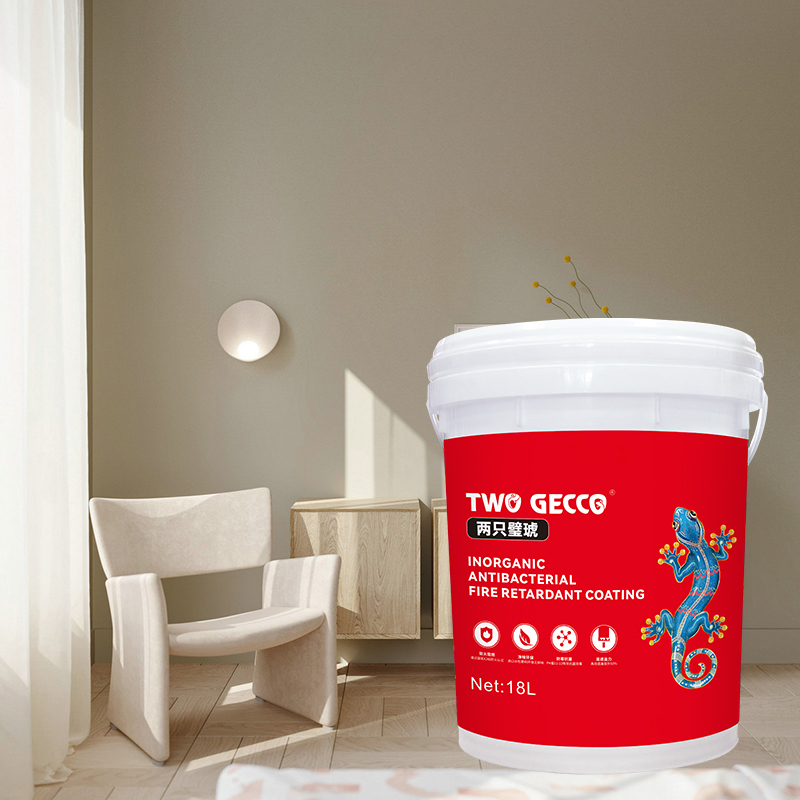
Fire-rated and antibacterial finishes have moved from niche specification to standard practice in hospitals, schools, laboratories, transport hubs and public buildings. For buyers, the challenge is that these claims are easy to print on a label and harder to substantiate.
How Fireproof Coatings Work
Fire-retardant coatings are not simply "paint that does not burn". They work through several mechanisms:
- Intumescence – the film expands when heated to form an insulating char layer that slows heat transfer to the substrate.
- Inorganic mineral systems – mineral-based coatings based on silicate binders are inherently non-combustible and produce no significant smoke or toxic combustion products.
- Flame retardant additives – halogen-free or halogenated additives interrupt the combustion chain reaction in organic binder systems.
For high-occupancy interiors, mineral or inorganic systems are generally preferred because smoke emission and toxicity during a fire are as important as flame spread.
How Antibacterial Coatings Work
Antibacterial functionality typically comes from active agents incorporated into the film:
- Silver-ion based – slow-release silver ions disrupt bacterial cell function; long-lasting and widely used.
- Zinc-based – lower cost, generally shorter effective life.
- Photocatalytic titanium dioxide – requires light to activate; performance varies with lighting conditions.
A critical distinction for buyers: antibacterial coatings inhibit bacterial growth on the surface. They do not sterilise the air, and they do not replace cleaning protocols. Marketing that implies otherwise should be treated with caution.
Where These Coatings Are Specified
| Environment | Driver | Typical Requirement |
|---|---|---|
| Hospitals and clinics | Infection control | Antibacterial, scrub-resistant, low VOC |
| Schools and kindergartens | Safety and air quality | Low odour, low VOC, washable |
| Public corridors and stairwells | Egress safety | Fire-retardant, durable finish |
| Laboratories | Chemical and biological control | Chemical-resistant, antibacterial |
| Food processing areas | Hygiene compliance | Antibacterial, washable, non-toxic |
What Evidence to Request from a Supplier
- Test reports, not marketing claims – ask for the actual test report with the issuing laboratory, test standard, date and sample identification.
- Flame spread and smoke ratings – confirming which standard was applied, and the tested substrate, since ratings are substrate-dependent.
- Antibacterial test method and strains – which organisms were tested, at what contact time, and the resulting reduction rate.
- VOC and heavy metal content – relevant for indoor air quality compliance in most markets.
- Shelf life and storage conditions – inorganic and specialty systems often have different stability profiles than conventional latex.
- Recoat window and application conditions – temperature and humidity limits that, if ignored, void performance.
Balancing Performance Against Practicality
Specialty coatings cost more, so specification should be targeted rather than blanket. A practical approach is to apply fire-retardant and antibacterial finishes to high-traffic and high-risk zones – corridors, treatment rooms, food areas – and use standard low-VOC interior coatings in low-risk spaces. This controls cost while meeting the actual compliance requirement.
Supplying Specialty Coatings
We manufacture fire-retardant and inorganic antibacterial coating systems alongside conventional interior and exterior wall paints, with OEM and ODM support. Technical documentation accompanies our export orders so your customers can reference test evidence in their own project submissions.
Send us your application, compliance requirement and target market, and we will recommend the appropriate system and supporting documentation.