
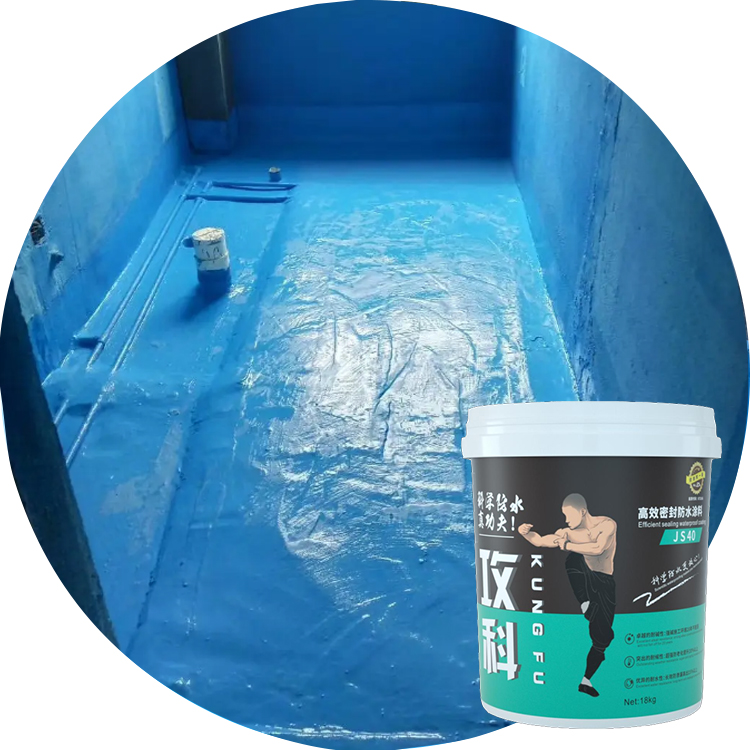
Waterproofing is the single most failure-prone stage in wet-area and below-grade construction, and most failures trace back to one root cause: a system family that does not match the substrate or the exposure condition.
The Three Main System Families
| System | Typical Use | Key Strength | Watch Out For |
|---|---|---|---|
| Cementitious (rigid) | Basements, water tanks, swimming pools, retaining walls | Excellent adhesion to concrete, can be applied to damp substrates | Rigid – will crack if the structure moves |
| Polymer-modified cementitious (JS type) | Bathrooms, balconies, kitchens, roof decks | Balances flexibility with cementitious adhesion | Requires correct mixing ratio and full cure |
| Polyurethane (PU, flexible) | Roofs, terraces, areas with movement or detailing | High elasticity, bridges cracks, seamless membrane | Moisture-sensitive during application; needs dry substrate |
Choosing by Substrate and Movement
The decisive question is whether the structure is expected to move:
- Static concrete structures (basement walls, tanks) – cementitious or JS systems are efficient and cost-effective.
- Structures with thermal movement (roof decks, terraces) – flexible PU systems absorb movement that would crack a rigid film.
- Wet interior areas (bathrooms, kitchens) – JS-type polymer-modified cementitious is the standard choice, often applied in two crossed coats.
- Areas with complex detailing (pipes, corners, drains) – flexible systems handle detail work better, often with reinforcing mesh at junctions.
Where Waterproofing Actually Fails
- Insufficient film thickness – the specification says 1.5 mm but the applicator achieves 0.8 mm. Thickness is the single biggest determinant of service life. Always verify wet film thickness during application.
- Poor substrate preparation – dust, loose material, oil or active water leaks all destroy adhesion. Active leaks must be stopped before waterproofing, not after.
- Wrong curing – cementitious systems need moisture to cure; PU systems need to be protected from rain during cure but should not be flooded.
- Untreated junctions – corners, pipe penetrations and floor-wall transitions are where water finds a path. These need reinforcement, not just a thicker coat.
- Missing protection layer – a waterproof membrane exposed to tiling or backfill without protection can be punctured during subsequent works.
Specification Checklist for Waterproofing
- Substrate type and moisture condition at application
- Whether structural movement is expected
- Required film thickness and number of coats
- Reinforcement detail at corners and penetrations
- Compatibility with the subsequent tiling adhesive or screed
- Protection layer requirements
- Testing method before closing up (ponding or flood test where applicable)
Sourcing Waterproofing Systems
We manufacture waterproof coating systems including polymer-modified cementitious (JS) grades for wet interior areas and below-grade applications, supplied in export packaging with OEM and ODM support for your own brand.
Tell us your substrate, area and application method, and we will recommend the appropriate system family and coverage calculation for your project.